
Weaving vs Macramé - which Craft Is Right for You?
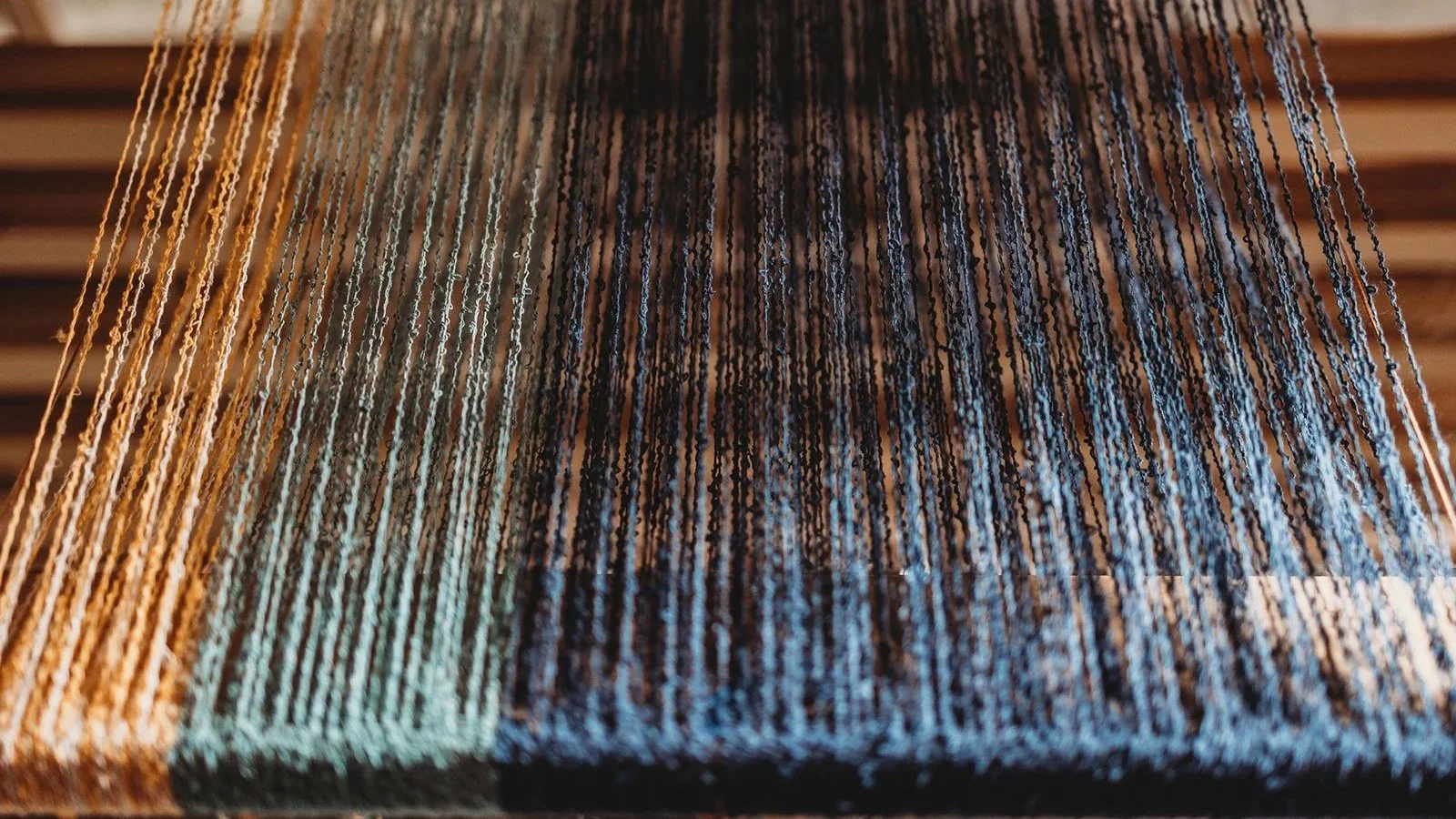
Here, warp threads are set up for interlacing weft threads to produce cloth
By Workplayhouse | Weaving Classes Melbourne
If you've been thinking about picking up a fibre craft, chances are you've come across both weaving and macramé. They both involve yarn, both make beautiful things and they've both had a serious moment in the spotlight over the last few years. But they're actually quite different — in how they feel, what they make, and what kind of person tends to fall in love with them.
Here's an honest comparison to help you figure out which one is calling your name.
What is macramé?
Macramé is knotting. You take lengths of cord — usually cotton rope — and tie them together in sequences of knots to create patterns. No loom required. You work from a dowel or ring hung on a wall, and the whole thing is done with your hands.
The finished results are gorgeous: wall hangings, plant hangers, table runners, bags. Macramé has a very distinctive look — bohemian, textural, often monochrome — and it's had a huge resurgence because it photographs beautifully and works well in modern interiors.
What is weaving?
Weaving is interlacing. You set up threads running in one direction (the warp), then pass yarn through them in the other direction (the weft) to create a fabric. You use a loom to hold the warp under tension while you work.
The results are almost infinitely varied: scarves, pouches, wall hangings, shoelaces, table runners, fabric. Weaving can be bold and graphic, or fine and subtle. It can be rustic or refined. The look depends entirely on the yarns you choose and the patterns you create.
How do they feel to do?
Macramé is intuitive and quite fast to learn. The basic knots are straightforward, and you can make something that looks impressive within a few hours. It's tactile and satisfying, and there's something meditative about the repetition of knotting.
Weaving takes a little more setup — warping a loom requires patience and attention — but once you're weaving, it has a rhythm that's genuinely absorbing. Many weavers describe it as the craft equivalent of flow state. You sit down, start passing the shuttle, and suddenly an hour has gone by.
Both crafts are calming. Both reward slowness. But they feel different in the hands.
What do you make?
Macramé lends itself to decorative pieces — things you hang on walls or use to hold other things (hello, plant hangers). It's less suited to wearable or functional textiles.
Weaving can go either way. At Workplayhouse, beginners make functional things from the very first session — a pair of shoelaces, a zip pouch, a bracelet. The Learn to Weave course moves into scarves and more complex projects. If you want to make things you can actually use and wear, weaving tends to win.
Which one should you learn first?
It depends on what draws you to craft in the first place.
Choose macramé if:
You want something you can set up anywhere with no equipment
You love a boho, textural wall-hanging aesthetic and drawn to working with chunky rope
You want to make something impressive quickly
Choose weaving if:
You want to make things you can use — wear, carry, gift
You like the idea of working with a tool (a loom is a beautiful object)
You're drawn to colour, pattern and structure
You want a skill with genuine depth — something you can keep getting better at for years
You like the idea of understanding how fabric is actually made
Many fibre artists work across multiple crafts. But if you're starting from zero, learning one properly before adding another tends to serve people better. You build real skill and confidence rather than a surface-level understanding of several things.
Want to try weaving and see if it's for you?
At Workplayhouse, our Weave+Leave sessions are designed for this — one session, no experience needed, and you leave with something finished. There's no six-week commitment, no equipment to buy, and no pressure.
If you love it, the Learn to Weave course is the next step. If you don't, you still leave with something you made with your hands. Either way, you'll know.
Workplayhouse offers weaving workshops and courses in Melbourne's inner north — Northcote, Alphington and Richmond. Taught by Corrin McNamara in small groups.
