
What can you make on a loom, beyond a scarf?
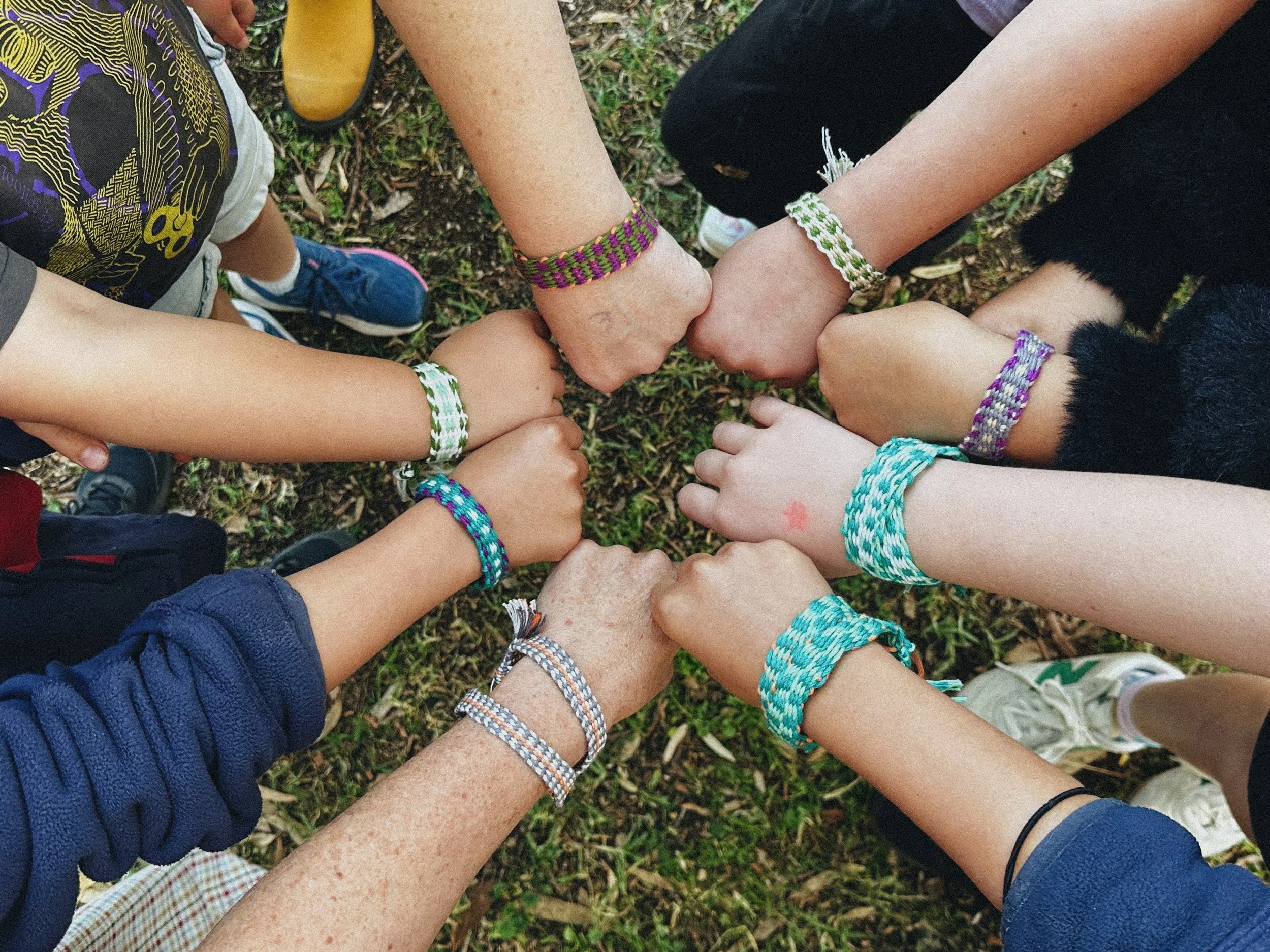
From our Kids School Holiday Weaving Session - make your own bookmark or bracelet
For most people, when they picture weaving, imagine a scarf. A long, rectangular one draped around someone's neck. Yes, scarves can be woven but there’s so many more things a weaver can make on a loom.
Here's a more honest answer to the question.
Pouches and bags
A woven zip pouch is one of the most satisfying beginner projects because the result is immediately useful. You make the fabric on the loom, then the fabric becomes something you carry around. A makeup bag, a coin purse, a place to put your headphones. The weaving is the point, but the finished object is real and useful.
At Workplayhouse the zip pouch is one of our most popular Weave + Leave projects, achievable in a single three-hour session and you leave with something finished.
Shoelaces
This surprises people. Shoelaces are narrow, repetitive, and simple which makes them ideal for a beginner working on a loom for the first time. The technique is the same as any weaving but the scale is just smaller. A pair of laces you made yourself, in whatever colours you chose. So fun. They're genuinely good-looking. Handwoven shoelaces have a unique look that mass-produced ones don't.
Wall hangings
Wall hangings sit at the decorative end of weaving, an art object. You can introduce different yarns, textures, and colours, let the fringe hang loose, add tassels or driftwood. There's more room to experiment than in a structured project like a pouch.
They're a popular starting point for people who want to weave and aren't sure what they'd do with a scarf.
Bracelets, bookmarks, keyrings
A small loom is enough to weave a bracelet. It's a great entry point for younger makers, which is why we run bracelet workshops for kids aged 8–11. The project is short enough to hold attention, immediate enough and the rewarding result is something that creates meaning.
Table runners, placemats, tea towels, hand towels
Flat, rectangular, functional. Tableware linens are natural loom projects. Woven placemats in particular have a texture and weight that you can't replicate with printed fabric. Think different weft yarns like paper, grasses, fabric strips, the sky’s the limit. Expand your skills with some pickup technique to add interest or plain weaving can be fun too. No sewing machine skills required.
Fabric (that becomes something else)
This is where weaving gets more open-ended. Once you understand how to make cloth, you can make cloth for anything. Cushion covers, tote bags, small garments. The loom produces the cloth, what you do with it is up to you.
This is more the territory of a longer course than a one-session workshop, but it's worth knowing it's where the skill leads.
So where do you start?
If you're in Melbourne and want to try weaving without committing to a course, our Weave + Leave workshops are designed for exactly that. One session, a finished object, no prior experience needed.
If you want to learn properly, how a loom works, how to build more complex projects over time, our Learn to Weave workshop is the starting point, with a six-week course available for those who want to go further.
Check out our offerings in our Learn menu.
